
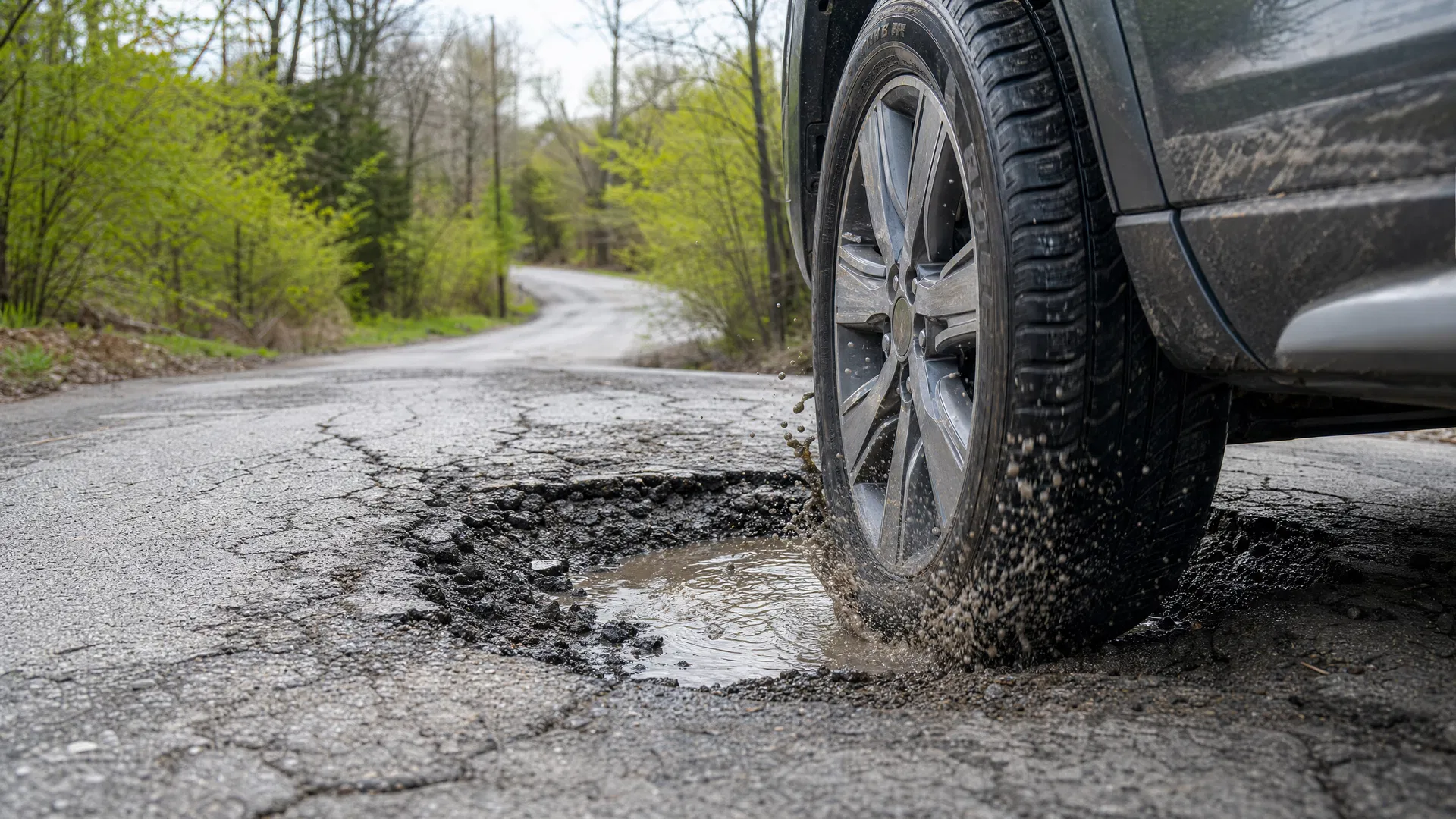
Every spring, Kentucky roads reveal the toll that winter has taken. Freeze-thaw cycles crack and crumble asphalt, leaving behind potholes that range from minor annoyances to tire-destroying craters. If you've hit a pothole hard enough to feel it in the steering wheel — or heard that sickening thud from underneath — your vehicle may have sustained damage that isn't immediately visible.
The tricky thing about pothole damage is that it doesn't always show up right away. A slightly bent wheel rim might not cause problems at 25 mph but could produce a noticeable vibration at highway speeds. A shifted alignment might feel fine on straight roads but pull hard during turns. Here's what to look for and what to have inspected after a rough encounter with a pothole.
Tires: The First Line of Defense
Tires absorb the initial impact of a pothole, and they're often the first casualty. Check the sidewalls for bulges, bubbles, or cuts. A sidewall bulge means the internal structure of the tire has been compromised, and the tire needs to be replaced immediately — it cannot be repaired safely. Also check for uneven tread wear, which can develop quickly if the impact knocked your alignment out of spec.
If you're running low-profile tires, you're at higher risk for pothole damage because there's less rubber between the road and the rim to absorb the shock.
Wheels and Rims
Aluminum alloy wheels can bend or crack on impact. A bent rim may cause a slow air leak that's hard to detect — your tire pressure warning light might come on intermittently, or you might notice the tire losing a few PSI every week. Cracks in the rim are more serious and require immediate replacement.
Alignment and Steering
One of the most common results of hitting a pothole is a knocked-out alignment. If your car pulls to one side, the steering wheel sits off-center when driving straight, or you notice the vehicle wandering on the highway, your alignment likely shifted on impact. Driving with misaligned wheels accelerates tire wear and reduces fuel efficiency, so it's worth getting checked sooner rather than later.
Suspension Components
Your shocks, struts, control arms, and tie rods are all designed to absorb road impacts, but a severe pothole hit can exceed their limits. Damaged shocks or struts may cause the vehicle to bounce excessively, bottom out over bumps, or feel unstable in turns. Bent control arms or damaged ball joints are more serious — they affect steering precision and can become a safety hazard if left unaddressed.
Undercarriage and Exhaust
Deep potholes can scrape or dent the undercarriage, damaging the exhaust system, catalytic converter, or protective splash shields. If you hear a new rattling or scraping noise after hitting a pothole, have the underside of your vehicle inspected. A loose heat shield is a minor fix, but a cracked catalytic converter or damaged exhaust pipe needs prompt attention.
What to Do After Hitting a Pothole
Pull over when it's safe and do a visual inspection of your tires and wheels. Listen for any new noises as you drive. If the steering feels different or the car pulls to one side, drive cautiously and schedule an inspection as soon as possible. Even if everything seems fine, it's a good idea to have your alignment checked — the peace of mind is worth it.
Final Thoughts
Potholes are an unavoidable part of spring driving in Kentucky, but the damage they cause doesn't have to be. A quick inspection after a hard impact can catch problems before they escalate into expensive repairs or unsafe driving conditions. At Certified Auto Service, we see pothole damage every spring — from bent rims and blown tires to shifted alignments and damaged suspension components. If you've had a rough encounter with a pothole this season, bring your vehicle in for a thorough inspection. We'll make sure everything is straight, tight, and safe.
Need Help With Your Vehicle?
Our ASE-certified technicians are here to help. Schedule your appointment today.
Reserve Your Spot

